


Responsible Gambling Guide
Responsible gambling begins before the first deposit, the first bet, or the activation of a promotion. It means deciding in advance how much time and money you are prepared to spend, understanding the platform’s terms, and recognising when an activity that initially seemed recreational begins to create pressure, conflict, or financial consequences.
This guide has been prepared for informational purposes for readers in Argentina who are interested in online casinos and sports betting. Its purpose is to provide practical criteria for assessing habits, setting personal limits, understanding promotions, and identifying warning signs.
This website is an independent informational resource. It is not a casino, sportsbook, operator, payment service, regulatory authority, or Altaficha customer support service. It does not manage accounts, accept bets, process deposits or withdrawals, verify documents, or activate limits, breaks, or self-exclusion on behalf of users.
The official Altaficha website includes Casino, Live Casino, and Sports sections, as well as promotions, tournaments, and a VIP Club related to reloads and rebates. Because each product may have different rules, probabilities, and conditions, all applicable information should be reviewed before depositing money.
The availability of bonuses, payment methods, currencies, limits, and protection tools may vary depending on location, user profile, and verification status. The definitive information is the information displayed in the current terms and in the Cashier section of each account.
Responsible Gambling Begins Before You Play
A decision made before entering a platform is usually more rational than a decision made after losing, winning, or receiving a promotion. For this reason, limits should not be improvised during a session.
Before playing, it is advisable to define:
- The real reason why you want to play.
- The maximum amount you can afford to lose.
- The exact starting and finishing time.
- The rules of the selected game or bet.
- The conditions of any bonus.
- The warning sign that will tell you it is time to stop.
It is also important to accept from the beginning that no strategy can guarantee results. The money used may be lost, even if you have previously won.
Review Why You Want to Play
Asking yourself why you want to play can help you recognise an impulsive decision before making a deposit. Entering out of curiosity is not the same as playing because you need to recover money or escape from a personal concern.
Possible reasons may include:
- seeking entertainment for a short time;
- trying a new game;
- making a match feel more interesting;
- dealing with boredom;
- distracting yourself from a concern;
- recovering a previous loss;
- obtaining money quickly;
- paying off a debt;
- reducing stress, anger, or sadness.
The lower-risk option is to treat gambling only as paid entertainment. It should not be presented as an investment, employment, a source of additional income, or a financial solution.
If the main reason is a debt, a recent loss, an argument, or an intense emotional state, the most prudent choice is not to begin. Gambling may temporarily delay an emotion, but it does not resolve its cause.
Define Your Stopping Point Before You Begin
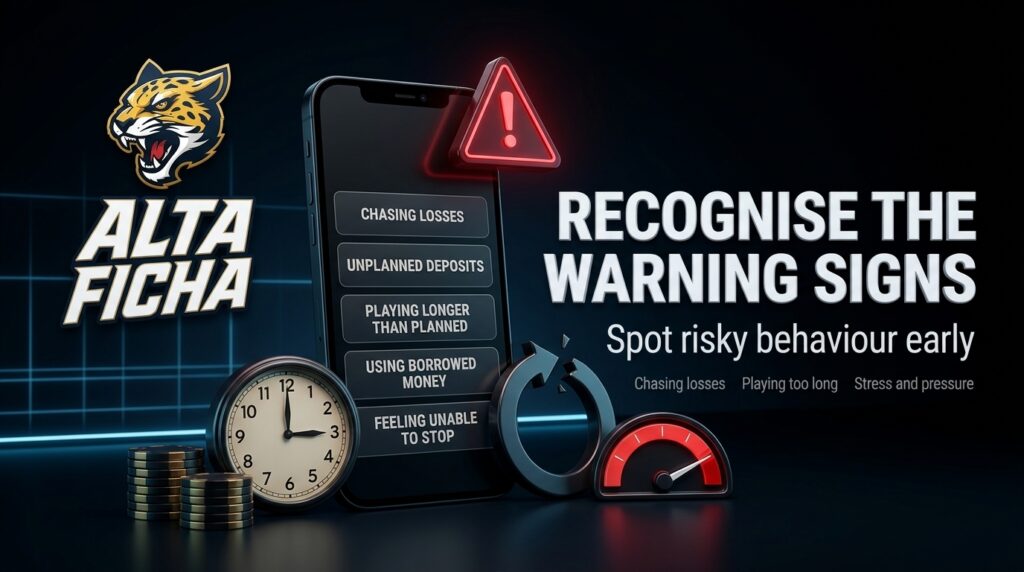
Your stopping point should be established while you are calm. It may relate to money, time, emotional state, or the way you are making decisions.
| Defined Warning Sign | Example | Recommended Action |
|---|---|---|
| Money limit | The reserved amount has been used | Close the platform without depositing again |
| Time limit | The planned period has ended | Leave even if there is still money in the balance |
| Irritation | Anger appears after a result | End the session |
| Tiredness | It becomes difficult to follow rules or concentrate | Move away from the device |
| Desire to recover losses | The idea of betting more appears | Do not make another deposit |
| Impulsive increase | The bet is doubled after a loss | Close the account and take a break |
A limit stops being useful if it is changed while you are playing. If the plan was to use a specific amount, it should not be increased because a promotion appeared. If the session was supposed to end at a specific time, it should not be extended because an event is “almost over.”
Keep Gambling Money Separate From Money Needed in Real Life
A gambling budget must remain completely separate from the funds required for everyday life. This includes both the initial deposit and any later deposits.
Funds reserved for the following expenses should not be used:
- rent, mortgage payments, or service charges;
- food and essential products;
- utilities and communications;
- transport or fuel;
- instalments, credit cards, and loans;
- medication or healthcare;
- education;
- taxes;
- family expenses;
- work equipment.
A practical question is: what would happen if this amount were completely lost?
If losing the money would force you to delay a payment, ask someone for help, reduce essential spending, or use credit, that money is not available for gambling.
There is no universal percentage of income that makes a bet safe. Financial responsibilities vary from one person to another. The main criterion should be the real consequence of losing the amount, not a general formula.
Avoid Borrowed Money and Credit
Borrowed money increases the risk because the loss remains as debt after the gambling session ends.
It is not advisable to:
- take out a loan to make a deposit;
- use salary advances;
- ask family members or friends for money;
- use a partner’s funds without their agreement;
- finance gambling with credit;
- sell personal belongings;
- delay mandatory payments;
- use money being managed on behalf of another person.
If you need credit or someone else’s money to continue gambling, the activity is no longer entertainment. The responsible decision is to stop, not to look for another source of funds.
Review How Each Payment Method Works
The method used to deposit money may affect budget control, verification, and subsequent withdrawals.
An external review updated in June 2026 mentions cards, MiFinity, bank transfers, and various cryptocurrencies for Altaficha. However, not all methods appear to perform the same function.
| Mentioned Method | Deposit | Withdrawal |
|---|---|---|
| Visa | Yes | Not specified |
| Mastercard | Yes | Yes |
| Bank transfer | Not specified | Yes |
| Cash2Code | Yes | Not specified |
| MiFinity | Yes | Yes |
| Bitcoin | Yes | Yes |
| Ethereum | Yes | Yes |
| Litecoin and other listed cryptocurrencies | Yes | Yes |
The same source provides the following reference information:
- main currency: USD;
- general minimum deposit: USD 10;
- minimum withdrawal: USD 20;
- withdrawal limit: USD 10,000 per month;
- deposits are generally instant;
- withdrawals may remain pending for up to three banking days;
- up to two withdrawal requests per day;
- the deposited amount must be wagered before requesting a withdrawal.
These figures should not be treated as guaranteed conditions for Argentina. Available methods may depend on the location, currency, payment-method holder, and verification status.
Before making a deposit, it is advisable to check the following information in the Cashier section:
- Which currency will be used for the account.
- Which methods are actually available.
- The minimum deposit for the selected method.
- The minimum withdrawal.
- Whether any fees apply.
- Which documents may be requested.
- Whether the withdrawal must be made using the same method.
- How long processing may take.
It should also not be assumed that Mercado Pago, an Argentinian card, a transfer in pesos, or a local wallet will be available simply because these methods are commonly used in Argentina. The valid information is the information displayed before the transaction is confirmed.
Time Limits Matter as Much as Deposit Limits
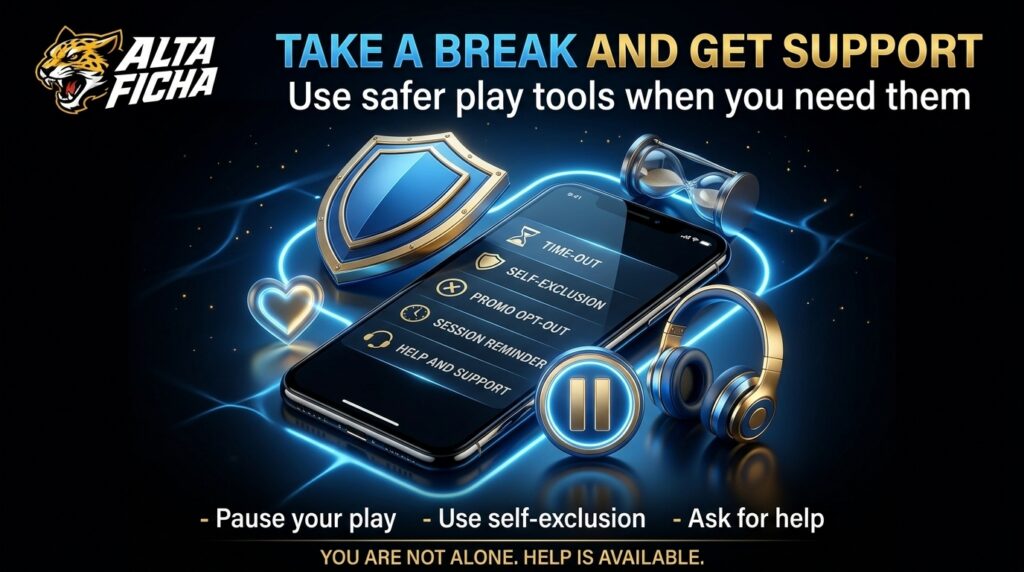
Time is another important indicator. Long sessions may reduce concentration, increase impulsiveness, and cause a person to normalise decisions they did not originally intend to make.
Before beginning, choose a starting time and a finishing time. Expressions such as “only for a while” or “until I get tired” do not create a verifiable limit.
To control the duration more effectively, it may be useful to:
- set an external alarm;
- avoid gambling before going to sleep;
- avoid gambling during work or study;
- take breaks away from the screen;
- keep other responsibilities visible;
- avoid combining gambling with alcohol or other substances;
- activate session reminders, where available.
The objective is not to find a universally safe duration, but to prevent the activity from continuing automatically.
Signs That Control Over Time Is Being Lost
Possible signs include:
- continuing for longer than planned;
- postponing tasks in order to keep playing;
- checking bets or the account balance during the night;
- sleeping less;
- opening the platform during work;
- interrupting studies;
- becoming irritated when someone asks you to stop;
- logging in again immediately after leaving;
- losing track of time.
A single incident is not enough to reach a definite conclusion. However, when these situations happen repeatedly, it is advisable to take a longer break and review the habit.
Treat Bonuses as Rules, Not Gifts
Bonuses, free spins, reload offers, rebates, cashback, and promo codes are not money without conditions. They are normally associated with requirements that may affect the amount wagered, the duration of play, and the ability to withdraw funds.
Common conditions include:
- wagering requirements;
- minimum deposit;
- validity period;
- maximum bet;
- excluded games;
- different contribution rates depending on the product;
- withdrawal limit;
- identity verification;
- territorial restrictions;
- ineligible payment methods.
The official Altaficha website advertises promotions, tournaments, and a VIP Club with reloads and rebates. One of its pages also displays a daily offer of up to 100%, with a maximum of USD 150 and 25 free spins. Availability and terms must be checked in the current promotion.
An external review also describes a welcome package divided across four deposits.
| Published Stage | Stated Benefit | Reported Wagering Requirement |
|---|---|---|
| First deposit | 100% up to USD 200 | 35x |
| Second deposit | 50% up to USD 400 | 35x |
| Third deposit | 75% up to USD 500 | 35x |
| Fourth deposit | 100% up to USD 300 | 35x |
In total, the review presents the package as 325% up to USD 1,400 and up to 450 free spins. It also mentions a period of 30 days for meeting the conditions.
This information does not constitute an invitation to deposit. On the contrary, it shows that a large promotional figure may be divided across several deposits and accompanied by wagering requirements.
Before accepting an offer, review the following:
| Condition | What to Check | Risk of Ignoring It |
|---|---|---|
| Wagering | How many times the bonus must be wagered | Being unable to withdraw the promotional balance |
| Validity | When the offer expires | Playing under pressure |
| Minimum deposit | How much must be deposited | Depositing more than planned |
| Maximum bet | The permitted amount per bet | Violating the terms |
| Eligible games | Which products contribute | Making less progress than expected |
| Maximum withdrawal | How much may be withdrawn | Expecting an amount that cannot be paid |
| KYC | Which documents are required | Experiencing delays later |
Do Not Deposit Only Because of a Promotion
Countdown timers, high percentages, and expressions such as “limited offer” can create pressure. A promotion should not be the reason for making an unplanned deposit.
If you were not planning to spend money before seeing the offer, you can:
- Close the promotional window.
- Read the complete terms.
- Review the required amount.
- Check the wagering requirement.
- Wait before making a decision.
- Reject the bonus if it changes your budget.
Not using a promotion does not cause a financial loss. Depositing without understanding its terms may lead to an unexpected expense.
Observe Emotional Changes While Playing
A session may begin calmly and change after a loss or a win. The risk increases when gambling stops being entertainment and becomes a way of regulating emotions.
It is advisable to stop if you experience:
- anger;
- anxiety;
- urgency;
- physical tension;
- excitement that is difficult to control;
- fear of stopping;
- a need to prove something;
- repeated thoughts about the next bet;
- a feeling that one bet will solve everything.
These reactions do not mean that you need to concentrate more. They mean that the decision is no longer being made calmly.
Winning Can Also Become Risky
Risk does not appear only when money is lost. A win can create an exaggerated sense of confidence.
After winning, a person may:
- increase the value of bets;
- return the entire balance to gambling;
- extend the session;
- ignore the time limit;
- accept additional promotions;
- believe they have found a safe strategy.
A favourable result does not change future probabilities or remove personal rules. If the planned finishing time has arrived, it should be respected even if the balance is positive.
It is also advisable to decide before beginning what will be done with any potential winnings. Making this decision during a period of excitement may make it easier to return all the money to gambling.
When Losing Makes You Want to Recover the Money
Trying to recover losses, commonly known as chasing, is one of the most dangerous patterns.
It may appear in the following ways:
- increasing the bet after losing;
- making several deposits;
- using money intended for other expenses;
- activating another bonus to continue;
- changing games in search of an immediate result;
- staying connected for longer;
- trying to recover everything with a single bet.
A loss does not create an obligation to continue. It also does not increase the probability that the next result will be favourable.
When the desire to recover losses appears, it is advisable to:
- Close the session.
- Move away from the device.
- Temporarily remove saved payment methods.
- Disable notifications.
- Speak with someone you trust.
- Reassess the situation after the emotional reaction has decreased.
Review the Session After It Ends
After playing, simply closing the page is not enough. It is useful to compare what happened with the original plan.
| Aspect | Original Plan | Actual Result |
|---|---|---|
| Money | Maximum amount | Total amount used |
| Time | Starting and finishing time | Actual duration |
| Deposits | Planned number | Number actually made |
| Bonuses | Planned promotions | Offers activated |
| Emotional state | Initial state | State at the end |
| Consequences | Protected tasks | Activities affected |
The objective is not to justify the result, but to recognise deviations. If a limit is repeatedly exceeded, increasing that limit does not solve the problem.
Questions to Ask Yourself After Gambling
Ask yourself:
- Did I spend more than planned?
- Did I play for longer than planned?
- Did I make an unplanned deposit?
- Did I try to recover a loss?
- Did I use money intended for something else?
- Did the session affect my sleep or work?
- Did I feel anger, guilt, or shame?
- Did I hide the expense?
- Do I want to return immediately to change the result?
If several answers cause concern, it is advisable to take a break and avoid automatically logging in again.
Use Protective Barriers Before the Problem Becomes More Serious
Protection tools should be used before a serious loss occurs.
Depending on the platform, the following tools may be available:
| Tool | Typical Function | Purpose |
|---|---|---|
| Deposit limit | Restricts deposits | Prevent impulsive additional deposits |
| Loss limit | Limits losses | Protect the budget |
| Wagering limit | Restricts the total amount wagered | Reduce the intensity of gambling |
| Session reminder | Displays the time elapsed | Maintain awareness of the session duration |
| Time-out | Temporarily blocks access | Interrupt impulsive behaviour |
| Cooling-off | Establishes a break | Create emotional distance |
| Self-exclusion | Prevents access for a longer period | Provide protection when control is being lost |
| Promo opt-out | Disables advertising | Reduce triggers |
| Payment block | Restricts transactions | Prevent additional deposits |
The names and terms depend on the individual service. This informational website cannot activate or cancel these measures.
Temporary Breaks and Time-Outs
A break may be helpful after:
- several consecutive deposits;
- a significant loss;
- a prolonged session;
- intense anger;
- attempts to recover losses;
- difficulty closing the account.
During a time-out, it is also advisable to disable promotional emails and stop following gambling-related results.
Self-Exclusion as a Stronger Measure
Self-exclusion may be appropriate when gambling affects:
- money;
- sleep;
- relationships;
- work;
- studies;
- decision-making ability;
- fulfilment of responsibilities.
It should not be interpreted as punishment. It is a protective barrier used when personal limits are no longer working.
In Argentina, the available mechanisms may depend on the province or the relevant regulatory authority. For the Autonomous City of Buenos Aires, Saber Jugar provides information about self-exclusion tools and procedures associated with Lotería de la Ciudad.
Protect Minors and Shared Devices
Minors must not access casinos or betting services. Do not share accounts, passwords, codes, documents, or payment methods with children or teenagers.
On shared devices, it is advisable to:
- log out;
- avoid saving passwords;
- remove stored cards;
- use separate profiles;
- activate parental controls;
- block gambling websites;
- protect digital wallets;
- keep documents out of reach.
It is also important to discuss promotions, influencers, and posts that show winnings without explaining losses. A minor may interpret gambling as an easy way to earn money if they only see positive results.
Age requirements should be checked in the applicable legislation and the operator’s terms. An account should not be assumed to be safe merely because it requests a date of birth.
Keep Account and Payment Information Private
You should never provide third parties with:
- passwords;
- SMS codes;
- photographs of documents;
- complete card details;
- banking credentials;
- access to digital wallets;
- authentication codes;
- screenshots containing private information.
Enquiries relating to verification, deposits, withdrawals, and account blocks must be resolved through the platform’s official channels.
An informational website does not need your password, full card number, or security code. If someone promises to speed up a withdrawal, recover losses, or unlock an account in exchange for this information, end the communication.
When Gambling Begins to Affect Everyday Life
The problem does not depend only on the amount lost. Even relatively small deposits may have consequences if they are repeated or replace essential obligations.
Possible warning signs include:
- overdue payments;
- debts;
- hidden transactions;
- frequent arguments;
- lying about money or time;
- sleep problems;
- reduced performance;
- abandoning studies;
- loss of interest in other activities;
- constant thoughts about betting;
- guilt;
- irritation when unable to gamble;
- repeated attempts to recover losses;
- inability to respect limits.
This guide cannot be used to make a diagnosis. However, if several areas of life are being affected, the safest measure is to stop the activity and seek support.
Ask for Help Early
It is not necessary to wait for a crisis. Initial steps may include:
- Speaking with someone you trust.
- Interrupting access to the platform.
- Removing saved payment methods.
- Activating limits or self-exclusion.
- Disabling promotions.
- Reviewing debts with assistance.
- Consulting a professional.
- Contacting an official support service.
In Argentina, assistance partly depends on the province. The Argentina.gob.ar portal provides information about problematic behaviours and support centres.
For residents of the Autonomous City of Buenos Aires, Saber Jugar offers the free telephone line 0800-666-6006, which is staffed by mental-health professionals from Monday to Friday, from 9:00 a.m. to 5:00 p.m. The programme also provides information about an assistance network offering individual psychotherapy, group support, family support, and other resources.
At the national level, SEDRONAR’s 141 helpline provides free and anonymous assistance 24 hours a day, every day of the year.
| Resource | Coverage | Type of Support |
|---|---|---|
| Saber Jugar — 0800-666-6006 | Autonomous City of Buenos Aires | Guidance concerning problem gambling |
| SEDRONAR Helpline 141 | Nationwide | Free and anonymous guidance |
| Provincial lottery authority | Depends on the province | Self-exclusion and local resources |
| Mental-health professional | Subject to availability | Assessment and support |
| Emergency services | Depends on the location | Immediate risk |
Before contacting a service, it is advisable to verify that the telephone number or website belongs to an official organisation.
If there is a risk that you may harm yourself or another person, do not wait to resolve the situation through a platform tool. Immediately contact the emergency services in your area or go to the nearest healthcare facility.
Conclusion
Responsible gambling is not about finding a winning strategy or taking advantage of every promotion. It means accepting the risk, protecting your budget, and stopping when signs of loss of control appear.
The main rules are:
- gamble only for entertainment;
- do not use money needed for essential expenses;
- avoid loans and credit;
- establish limits before entering a platform;
- review bonuses and wagering requirements;
- control the time spent gambling;
- do not chase losses;
- analyse each session;
- use protective barriers;
- ask for help early.
Not gambling is also a valid decision. Closing a session, rejecting a bonus, activating a break, or requesting self-exclusion does not mean losing an opportunity. It means prioritising your well-being, responsibilities, and life outside the platform.